Phases & Stages
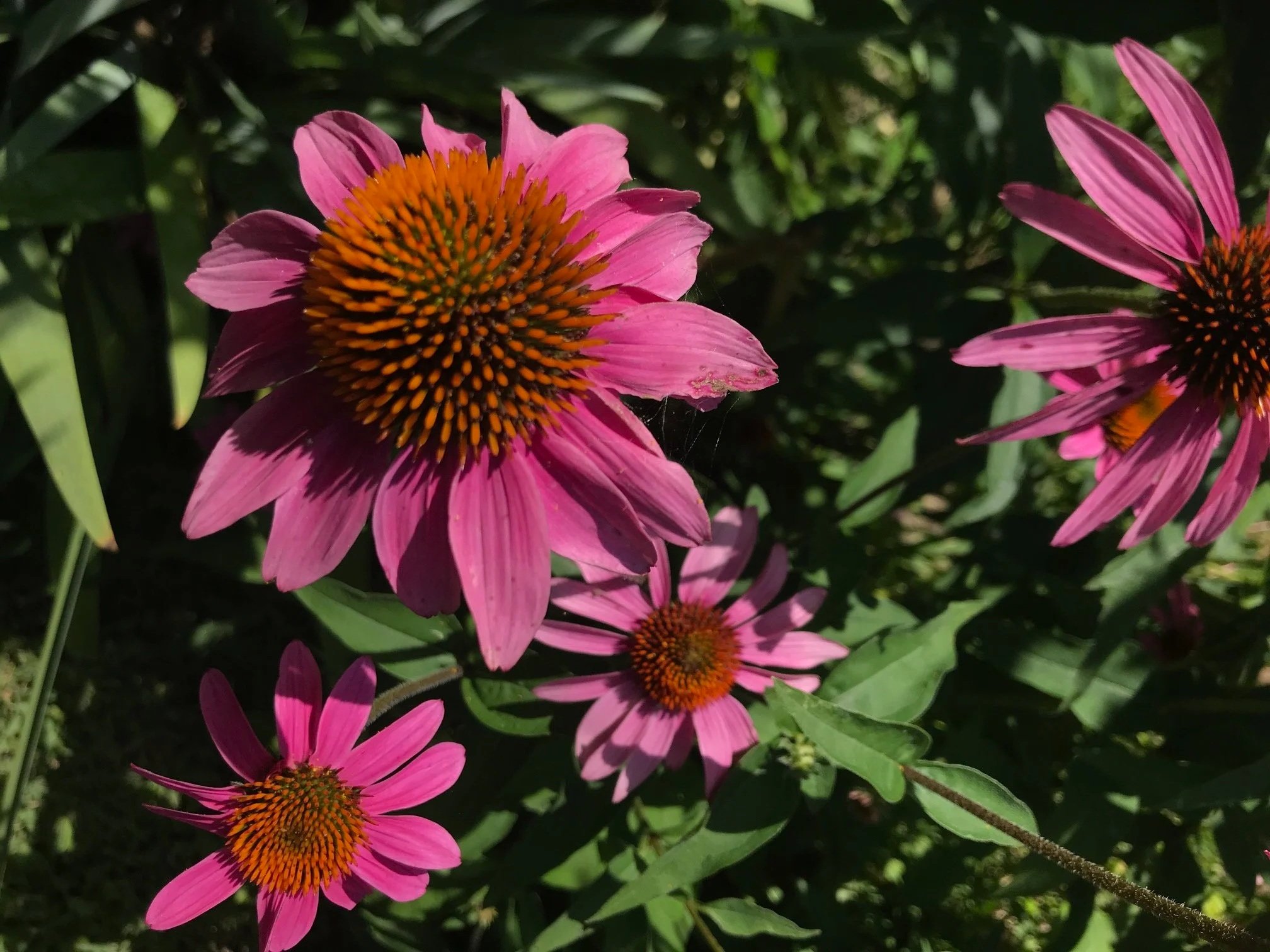
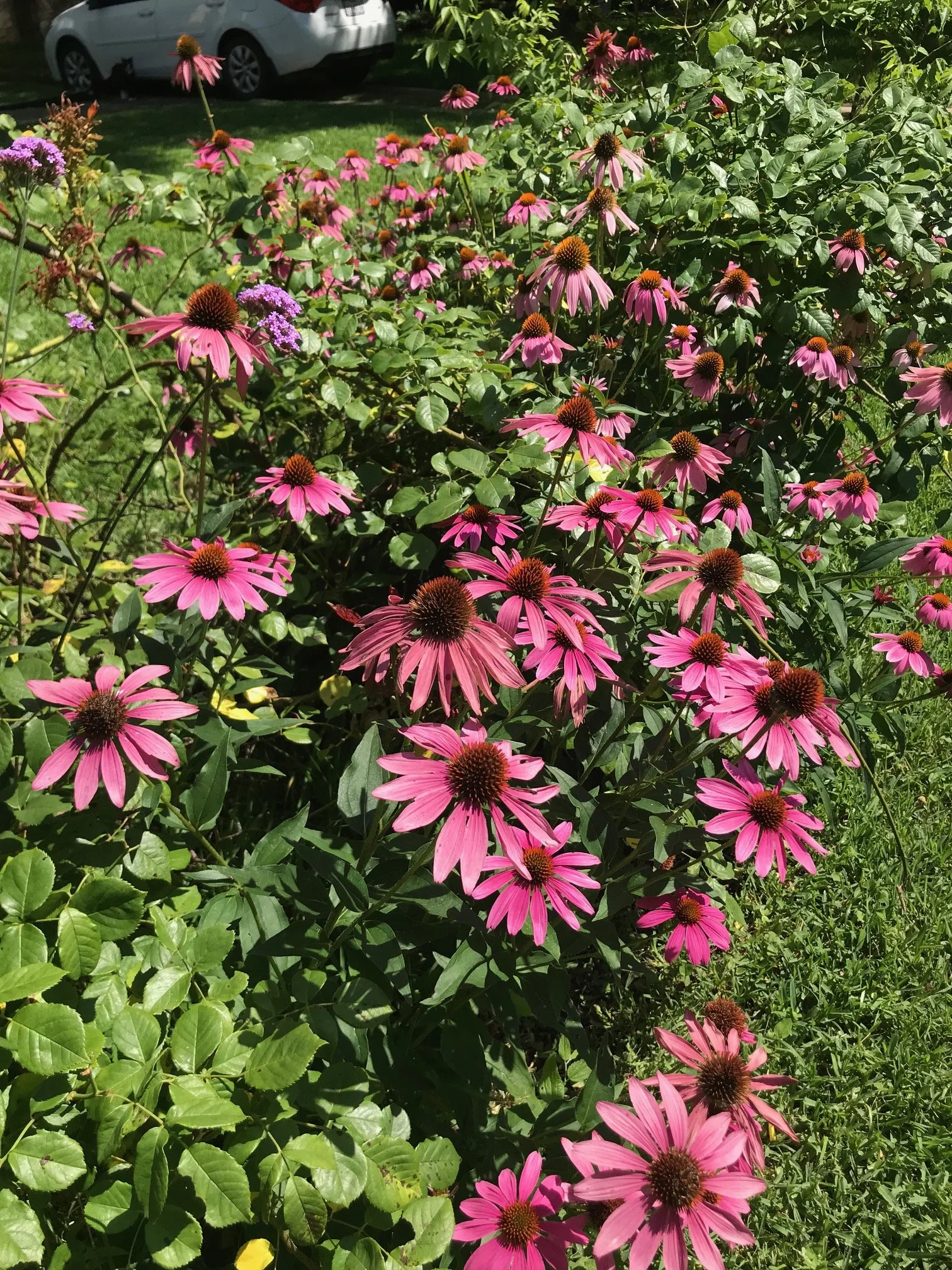
Echinacea purpurea Purple coneflower
Pass-along plants are a garden tradition.
My friend Jane personally dug up and potted for me some of the plants from her wild, yet well-tended garden masterpiece. She hand delivered echinacea, lyre leaf sage, cosmos seed, vinca ground cover and more. These were assertive, self-propagating and sustaining plants, which my garden desperately needs to begin moving toward lower maintenance. I couldn't have been more thankful.
Yet, this lovely gift came to me in a time of non-gardening.
We had connected by sharing life stories, whose similarities included infidelity induced divorces. She had meant this gift to lift me up in the middle of mine, but at that point, life felt too heavy.
Having turned my attention toward financial survival, emotional healing and getting dinner on the table, I could not muster the energy to plant these treasures. I set some of the pots in my border where I thought they might go. And they sat there.
And sat there.
And sat there.
For a while, spring rains kept them going, so I didn't even have to water, but of course that didn't last. As summer approached, one mild burst of energy arose and I moved them to the shady backyard, so they might survive a bit longer out of the frying Texas sun, until I could plant them.
But I didn't.
I didn't do anything.
I let them sit there in the backyard. I didn't plant them. I didn't even visit them.
I felt guilt, but that didn't stop me from totally letting these plants die. Each and every one of them completely croaked.
My imposter syndrome kicked in hard. I'm supposed to be a gardening professional.
How could I let ALL these plants die???
GIFTS from a dear friend who dug them up with her bare hands!
What kind of horrible slacker am I? I completely failed at receiving a beautiful gift that would have connected our two gardens forever.
There was nothing I could do, but accept the sting of regret.
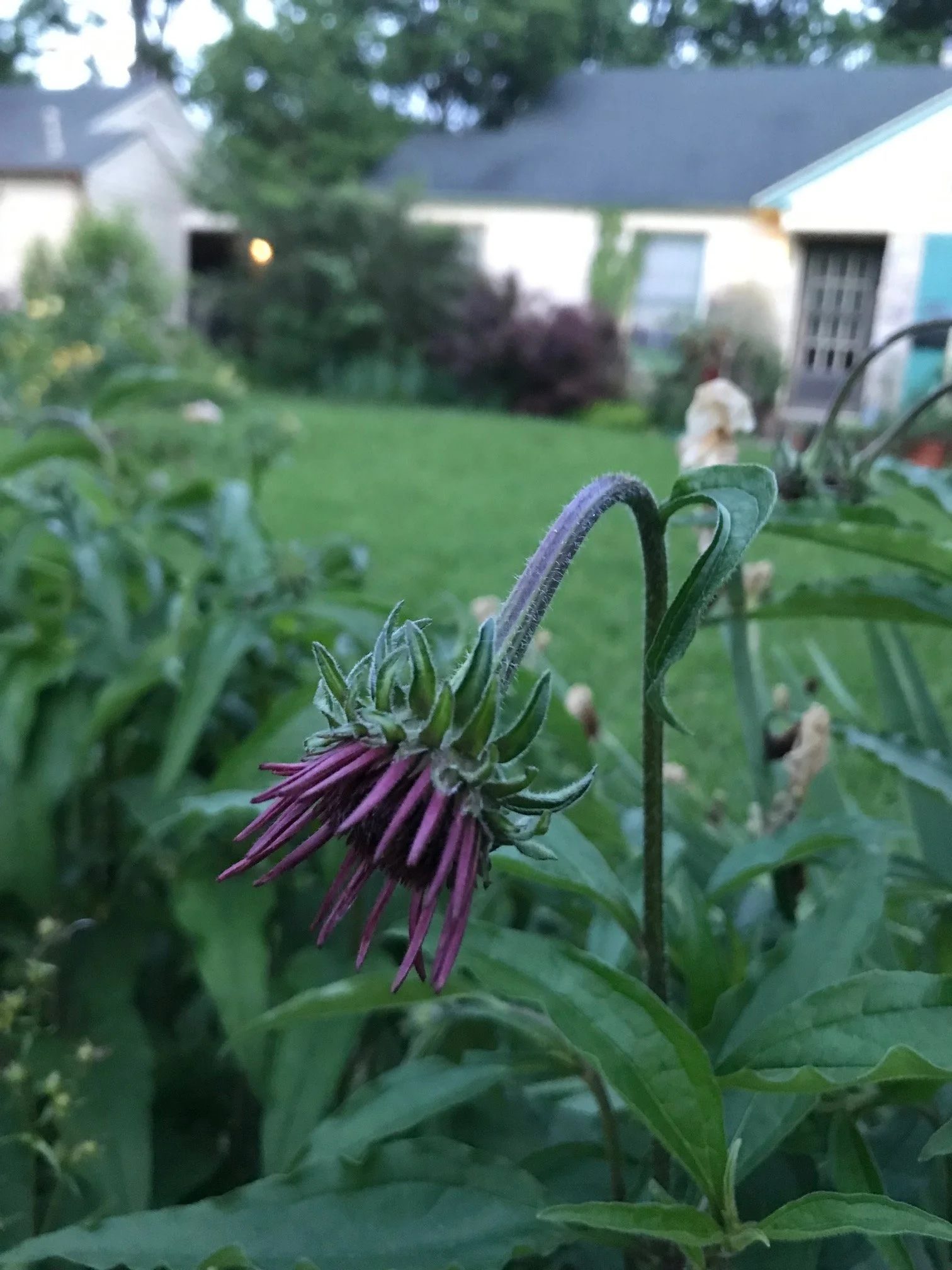
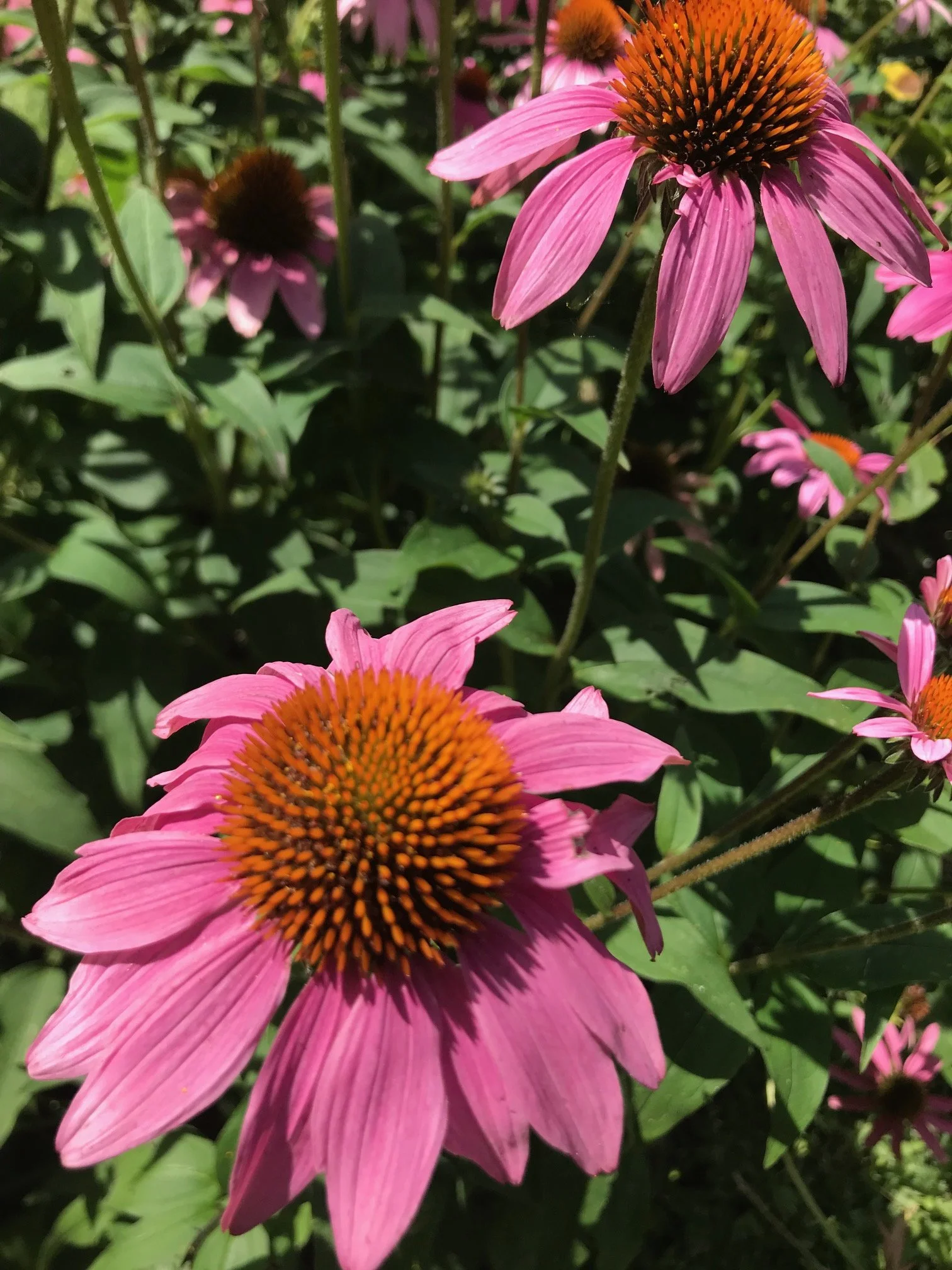
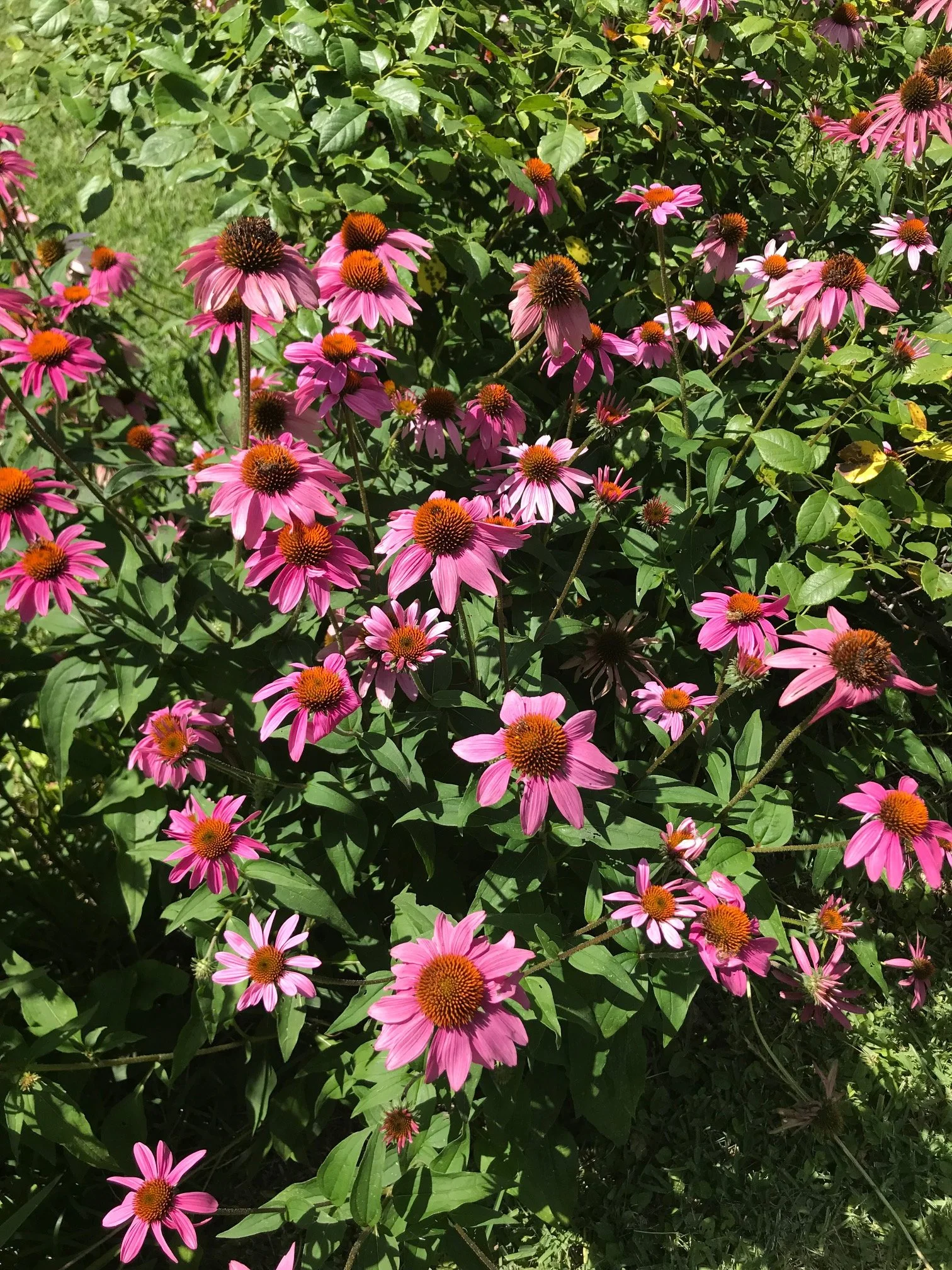
I'm not sure how much time passed before some of the echinacea sprouted in my garden. The seeds of this native plant are enjoyed by birds and some must have fallen around as the plants were dying in their pots.
At first I barely noticed the little clumps of leaves, but eventually the flower spikes rose up and bloomed, just as my roses were finishing. By now, more seeds have spread and these strong perennial plants have returned year after year. The other day when I was outside, a neighbor walked by remarking on their beauty and I marveled realizing this story of literal and metaphorical rebirth.
Some of the lyre leaf sage eventually appeared in the backyard as well. When I first recognized dark markings on the leaves, I thought:
I guess I'm not such a terrible person after all. This cycle of garden life redeemed me.
Jane has moved on to another life phase, tending her daughter’s Connecticut garden (cue Willie Nelson) and without her, that garden declined, but little pieces of it live on both there and here.
I continue to struggle with a sense of failure because I am not gardening with the intensity and devotion I once had. The unkempt mess of my so-called garden is barely worthy of a photograph these days, but wisdom still grows there.
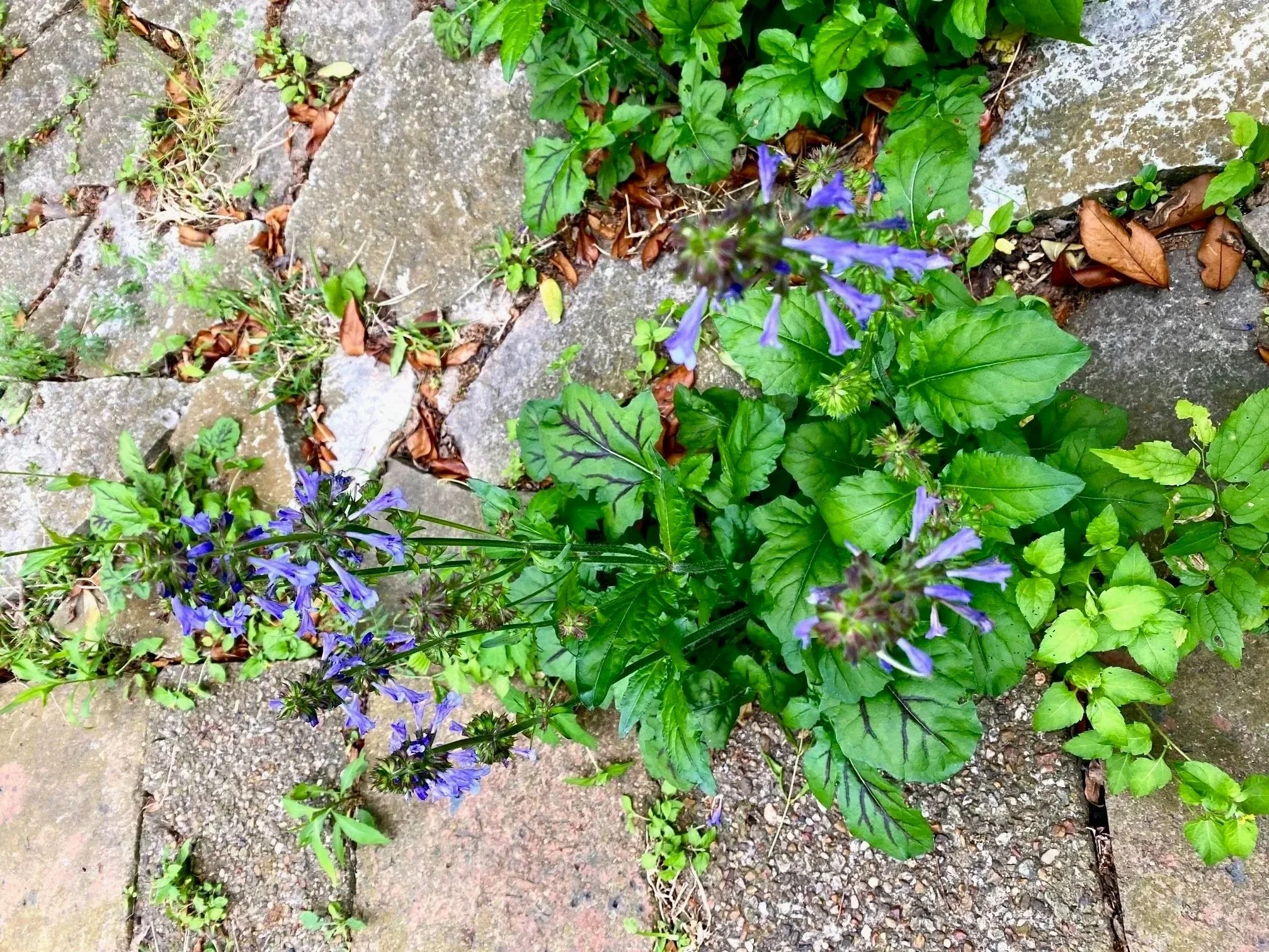
Salvia lyrata Lyreleaf Sage
Originally published JUNE 08, 2019
Apologies for the broken links from my old Bark Tree blog